
Finding Barnstable Residents Through Records
No office keeps a list of everyone in Barnstable. The public trail splits by purpose. The assessor ties a parcel to its assessed owner. The Registry of Deeds names parties to property instruments. A voter-status check covers one person at a time, and a municipal voter-list request runs through the Town Clerk. Courts, vital records, and historical collections each answer narrower questions. So anchor every search in a name, an address, or a date. Keep the source type attached to whatever comes back. A tax-record owner may not occupy the property. A deed party may not live there now, and a historical directory entry marks only a dated appearance. Holding those distinctions steady keeps a Barnstable residents directory useful without turning public fragments into a profile.
- For a current address, search the Town of Barnstable assessor by street, owner surname, or map and parcel key.
- Open the linked GIS map to confirm the parcel, village label, and nearby physical features.
- Use the Registry name index, book and page, or instrument search to document the title trail.
- For one voter’s status, use the state form with the required identifying fields. Request a municipal list from the clerk only when a specific public list is needed.
- For a past household, move to the Sturgis Library and State Library directory, newspaper, census, and voting-list collections.
Barnstable Records Need a Place Check
Barnstable is a single municipality, the Town of Barnstable, within Barnstable County. Its core villages include Barnstable Village, Centerville, Cotuit, Hyannis, Marstons Mills, Osterville, and West Barnstable. Postal communities add more names. Craigville, Cummaquid, Hyannis Port, Santuit, West Hyannis Port, and Wianno all appear on local mail. These labels matter when records get compared. A county Registry search can return records from all fifteen Barnstable County towns. A postal city or ZIP can differ from the municipal-town field. Before deciding two hits describe the same place, record the town, village or community, postal city, ZIP, and parcel identifier separately.
- Parcel
- A map-based property identifier used by the assessor and GIS, often the most reliable bridge between an address and a map.
- Index
- A finding list that points to a record. It is not always the full document or an official copy.
- Resident roll
- A record created for a limited public purpose, such as assessment or registration, rather than a complete household census.
- Postal city
- The delivery name attached to an address. It may not match the municipal town or village.
Barnstable Offices Behind Resident Records
Each custodian holds a different slice of the Barnstable record trail. The Registry keeps county title instruments. Town Assessing maintains the property display and its map connection. The Town Clerk handles elections, certificates, and archives. Municipal public-record requests also route through that office. Ask any of them for a defined record and date range rather than everything about a person.
Barnstable County Registry of Deeds
3195 Main Street / Route 6A
Barnstable, MA 02630
Public access: Monday through Friday, 8:00 AM to 4:00 PM
Town of Barnstable Assessing
Municipal property values and parcel details
Use the map, owner, or street search routes.
Barnstable Town Clerk
367 Main Street, Hyannis, MA 02601
508-862-4044
Monday through Friday, 8:30 AM to 4:30 PM
Barnstable Property Search Fields
The Town of Barnstable Assessing portal offers three entry points. You can search by map, block and lot. You can also search by owner last name. A street number with street name works too. Partial values work too. Results are split into Parcel, Location, Owner, Details, and Map. This keeps a name hit separate from the property record behind it.
| Portal route | Useful input | Result to preserve | Limit |
|---|---|---|---|
| Owner search | Full or partial last name | Parcel and location | Common surnames need a second identifier |
| Street search | Street number and street name | Result list, Details, Map | One street can span several result pages |
| Map/Block/Lot | Parcel key | Property detail and map link | Formatting may vary between systems |
| Detail display | Selected property | Owner-as-of date, village, values, sale references | Assessment is not a title opinion |
The official assessor search shows the three starting panels for a parcel trail.
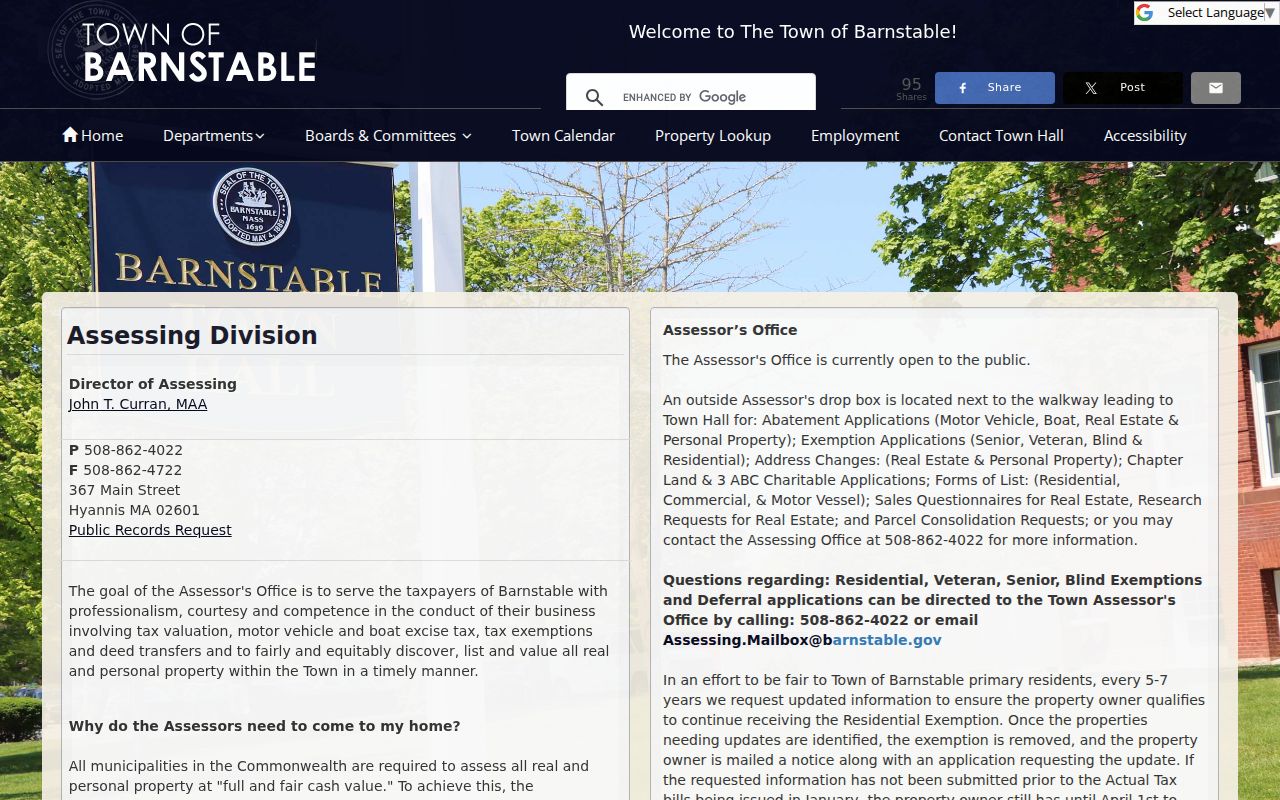
Treat the Details and Map links as bridges to later property and title checks. They are not proof of household occupancy.
Barnstable Deed Records Across Three Eras
Barnstable County's Registry is a deep property source. Recorded property starts in 1742. Land Court records begin in 1898. The address index starts only in August 1993. Those dates explain why an older house cannot be traced by a modern street query alone. For earlier links, rely on a party name, book and page, instrument, plan, or a prior deed reference. The Registry's public index and images are free to view. The online image is flagged as unofficial. A clean printed copy goes through the print cart at one dollar per page plus the stated card convenience charge. The property instrument can document title history, mortgages, releases, plans, or restrictions. It still does not show who lives there. The Registry's official home page sets out the countywide title-record scope and historic coverage.
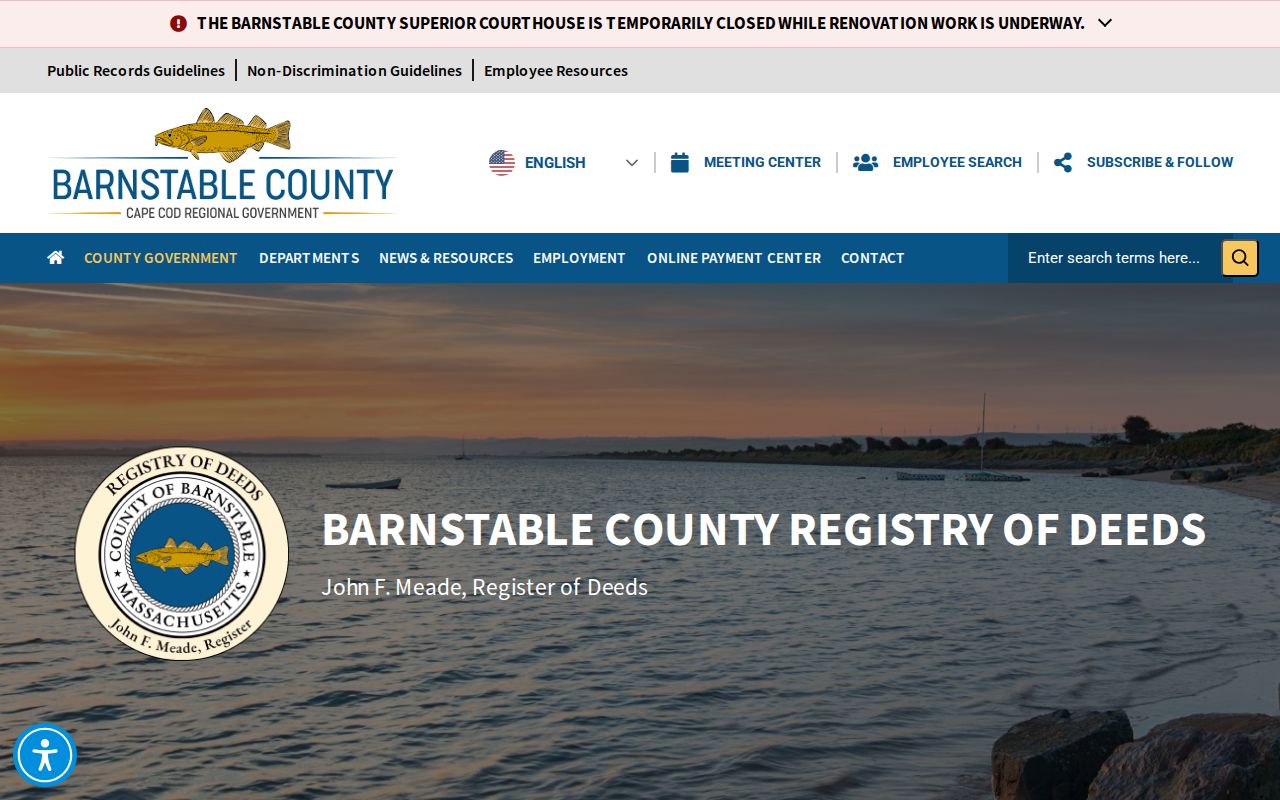
A countywide result can include another Cape Cod town.
Current Barnstable Resident Record Sources
Current public sources are purpose-built, so compare them rather than blend them. The assessor gives a property association. The Registry gives title parties. The voter-status tool answers one registration query, a court docket reports a case, and the Barnstable resident lookup shows how to keep those roles separate.
| Source | What it can establish | Custodian | Access boundary |
|---|---|---|---|
| Assessor property detail | Parcel, assessed owner, location, sales reference | Town of Barnstable | Owner field is not occupancy proof |
| Registry index | Parties, instrument, recording data, plans | Barnstable County Registry | Countywide title record, not a resident list |
| Voter status | One individual’s registration status | Massachusetts elections | Requires first name, last name, date of birth, and ZIP |
| Municipal voter list | Fields permitted in a requested local list | Town Clerk | Some fields and confidential records are not public |
| Court eAccess | Docket index and case metadata | Massachusetts Trial Court | Not the official file; restricted matters are excluded |
Barnstable Voter Status Is Not a Roll
Massachusetts provides an individual voter-status lookup, not an open statewide table of names. No roll of names is posted online. The form asks for first name, last name, date of birth, and a five-digit residential ZIP. A Barnstable voter-list request belongs with the Town Clerk or election office. Name the precinct, year, and format. Public local-list fields can include a name, address, party, date of birth, active or inactive status, and voter ID in the applicable record. Phone, email, veteran status, and absentee details stay protected. Confidential records and pre-registration fields are shielded too. A registration address proves neither occupancy nor personal conduct. The Massachusetts voter-status page shows the individual-only fields and the agreement step.
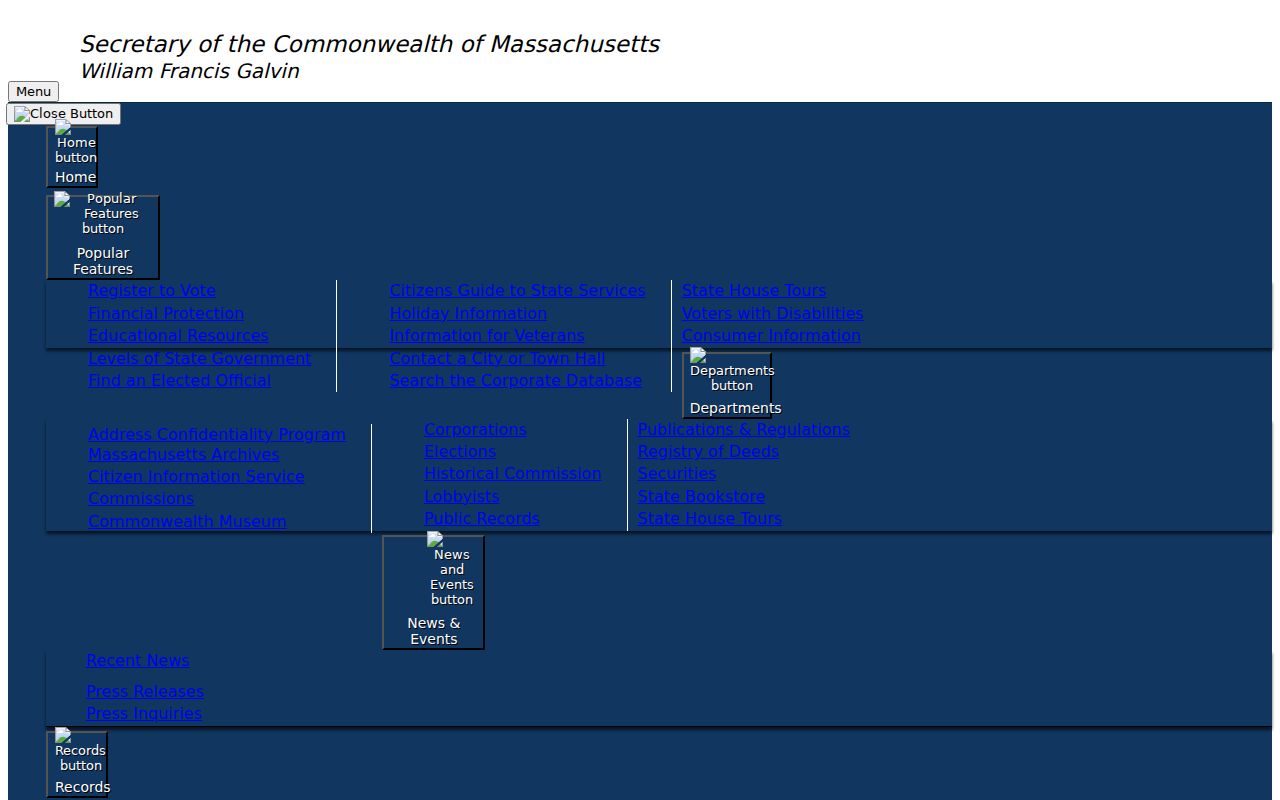
For historical voter snapshots, turn to the State Library holdings instead. The current form was never meant to serve as a historical directory.
Barnstable Names in Courts and Vital Records
Court and vital records answer different questions than a street directory. Each has its own custodian. Massachusetts Trial Court eAccess searches by name, case type, case number, or ticket and citation. Department, division, and location narrow the field. A hit shows the party or company, case number, type, file date, action, status, and court. Remember the limit. It is a docket index, not the official court file. It may lag behind recent activity.
Barnstable Probate and Family Court handles estates, guardianships, conservatorships, and family filings for the county. Some categories are confidential or impounded. A probate result works best as a lead for family history. Confirm it with the register or clerk before drawing conclusions about a person.
Vital records split between custodians. The Town Clerk holds local material. The Registry of Vital Records and Statistics keeps statewide records from 1936 forward. Genealogy access generally opens around 90 years for births and marriages and 50 years for deaths. Access is always subject to eligibility, authorization, exemption, and court-order rules.
Barnstable Public Record Requests
No online index means a public records request does the work. A narrow request beats a broad one. Name the record type, department, date range, and format you want. Good examples include a dated municipal record, an election list for a stated year, a defined permit record, or an archive item. The Records Access Officer can then say whether the office holds the record, needs more time, must charge a fee, or must withhold material under an exemption.
The legal framework sits in the Massachusetts Public Records Law, MGL c.66 §10 together with MGL c.4 §7. Any person may make a request. Put it in writing when appeal rights matter. The general response window is ten business days, with lawful extensions and exemptions, and it does not override court impoundment, vital-record eligibility, or confidential voter rules. The Secretary of the Commonwealth request guidance summarizes the statewide process.
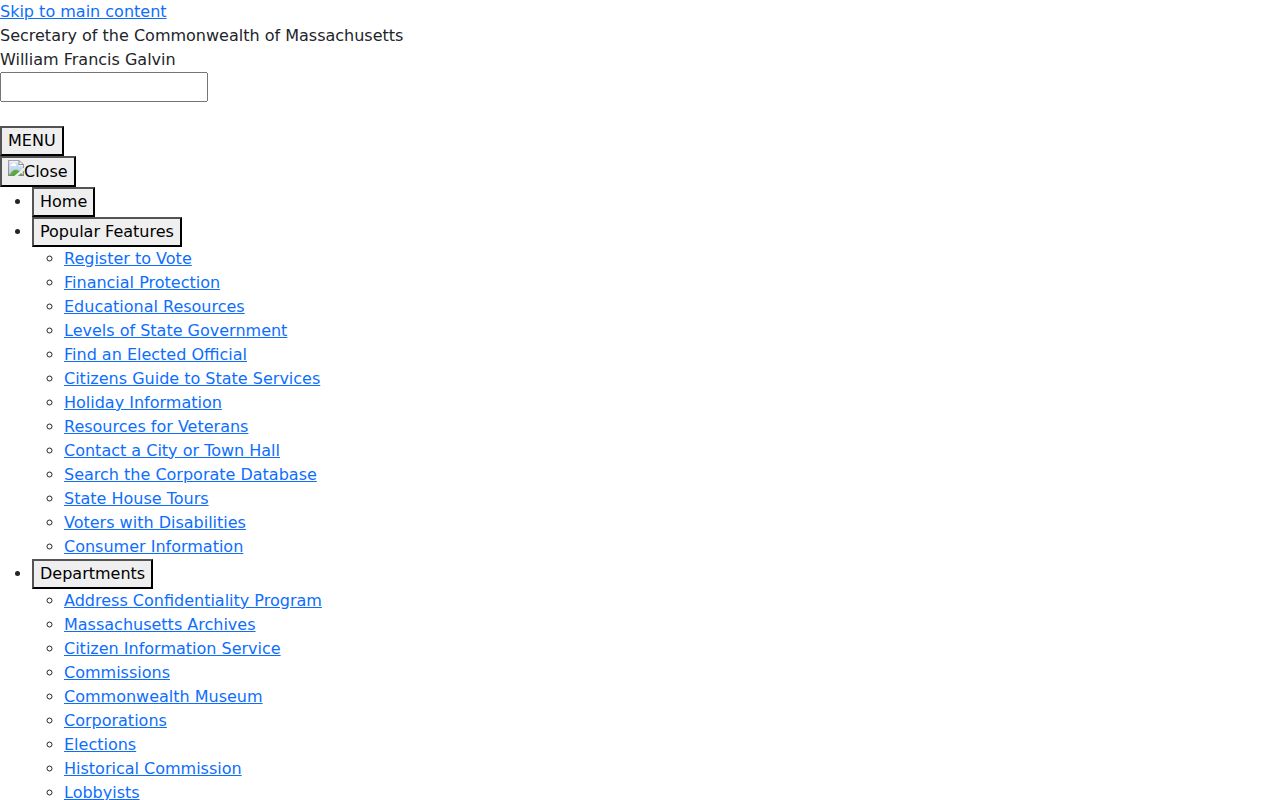
A clearly written request helps the records office and spares everyone a vague hunt for personal information.
Historical Barnstable Resident Directories
Sturgis Library anchors any dated household question in Barnstable. Its Barnstable Patriot digital archive runs from 1830 through 2017. The Barnstable Register archive spans 1836 through 2017. The library also describes print and microfilm research, family and civic collections, cemetery material, early deeds, and its handwritten Cape census collection. Treat an index hit as a lead. Check the article image and date before calling it evidence.
The Massachusetts State Library lists Barnstable and Hyannis directory years 1895, 1901, and 1926. It also lists Barnstable voting-list years 1924, 1943 through 1959, 1966, 1967, 1980, and 1988. These are snapshots. A directory or list can place a person or business in a given year. It cannot establish an uninterrupted address history.
Barnstable’s Sturgis Historical Shelf
Sturgis Library sits at 3090 Main Street in Barnstable. It serves as a regional center for Cape history, genealogy, and maritime research. Its finding aids describe more than 2,000 early Cape deeds starting in the 1620s. They also cover family papers, diaries, cemetery records, maps, church material, organizations, and local photographs. These are repository collections, not a searchable current-person database.
Collection MS.134 holds three boxes of original handwritten census records for most Cape towns, principally 1850, 1860, 1870, and 1880. A Barnstable 1870 folder is included. The set is incomplete. A missing name settles nothing. Record the repository. Note the collection name, folder, page, year, and whether the evidence is an index or an original image.
Barnstable Official Sources and Compiled Listings
Official sources start with a stated custodian, a record purpose, and an access rule. A Town assessor detail names an assessed owner as of a date. A Registry image ties parties and recording data to one instrument. A court portal supplies a docket index with its own disclaimer. Each can be checked at the office that maintains it. Each has a clear limit.
Commercial people-finding services belong to a different category. They may blend public and nonpublic data. They may charge for a result. They may show a name or address without the original custodian or date. That kind of result is no substitute for a parcel record. It is no substitute for a certified copy. It is no substitute for a dated library item. Verify anything that matters with an official source, and use its correction or safety process when needed.
The best comparison in Barnstable research is not which result has the most fields. Ask instead whether the result answers the specific question. Ask whether it identifies its date. Ask whether it traces back to the government office or repository that created it. That habit cuts down mistaken matches. It also keeps a historic or property record from becoming a claim about who lives in a household today.
Barnstable Record Freshness Checks
Dates matter with county records. The Registry of Deeds posts recording statistics in monthly reports. Its July 2026 figures appeared on August 6, 2026. MassGIS updated its property-tax-parcel page on July 22, 2026. That was part of a statewide standardization push. Neither item is a residents directory. They do show why a source date deserves a glance. Check it before anyone leans on a map layer or a parcel export.
The Sturgis Library newspaper page reports that the Barnstable Patriot and Register digital archive is back online. It carries a current hobby-account instruction for access. The library has published no dated restoration announcement. So treat that status as current rather than permanent. County pages also note a temporary Superior Courthouse closure for renovation, with no reopening date listed. Anyone planning a visit or a records request should confirm court operations directly with the court first.
Barnstable Record Privacy Boundaries
Public records are not a license to republish every field. Massachusetts law works alongside agency exemptions, court impoundment, voter confidentiality, and vital-record eligibility. The Address Confidentiality Program can supply a substitute address for eligible people facing address-disclosure danger. It can also provide mail forwarding. Court Rule 1:20 adds a protected-address process for court participants.
Lawful use. Use Barnstable record sources for personal, civic, family-history, estate, or property research. Do not use them to stalk, harass, intimidate, or harm another person, and do not publish protected-address or sensitive identifying data.
A name match alone proves little. Verify it against independent details, a source date, and the custodian's own access rules before treating it as accurate. When a record is simply wrong, contact the office that created or maintains it.