
Barnstable Past Residents Sources
Past-household research in Barnstable is strongest when the source changes with the era. Registry title records can establish a recorded property transfer. A historical newspaper can provide a dated notice or obituary lead. Sturgis census folders and State Library directory holdings offer period snapshots, while probate and cemetery material may help close an estate or family-history trail. No one source identifies every past household, and an older appearance never proves an uninterrupted stay.
| Source | Years it covers | Where held | What it shows |
|---|---|---|---|
| Registry title records | From 1742; Land Court from 1898 | Barnstable County Registry of Deeds | Recorded transfers, parties, plans, and title instruments |
| Registry address index | August 1993 onward | Registry address route | Unofficial address leads that require title validation |
| Barnstable Patriot and Register | Patriot 1830–2017; Register 1836–2017 | Sturgis Library | Verified articles, notices, obituaries, and advertisements |
| Handwritten census material | 1850, 1860, 1870, and 1880, incomplete | Sturgis MS.134 | Town-folder household and local-history evidence |
| Directories and voting lists | Directories 1895, 1901, 1926; voting lists 1924, 1943–1959, 1966, 1967, 1980, 1988 | Massachusetts State Library | Dated name and locality snapshots |
Start with the interval that matters. A recent ownership question belongs at the assessor and Registry. A nineteenth-century family question may begin with a Sturgis newspaper or finding aid, then return to a recorded deed only when the parties, date, and property connection are documented.
Barnstable House History Records by Era
The Registry gives Barnstable house history an unusual depth, but not one uniform search method. Real-property records begin in 1742. Land Court records begin in 1898. The Registry’s address indexing begins only in August 1993 and is unofficial and incomplete. Those three periods explain why an address search is a modern aid, while an older search must rely on a party name, book/page, instrument, plan, or Land Court reference.
A Barnstable Registry search-home screen shows the distinct routes for name, book and page, entry date, year and instrument, Land Court, plans, Find My Deed, and address searching.
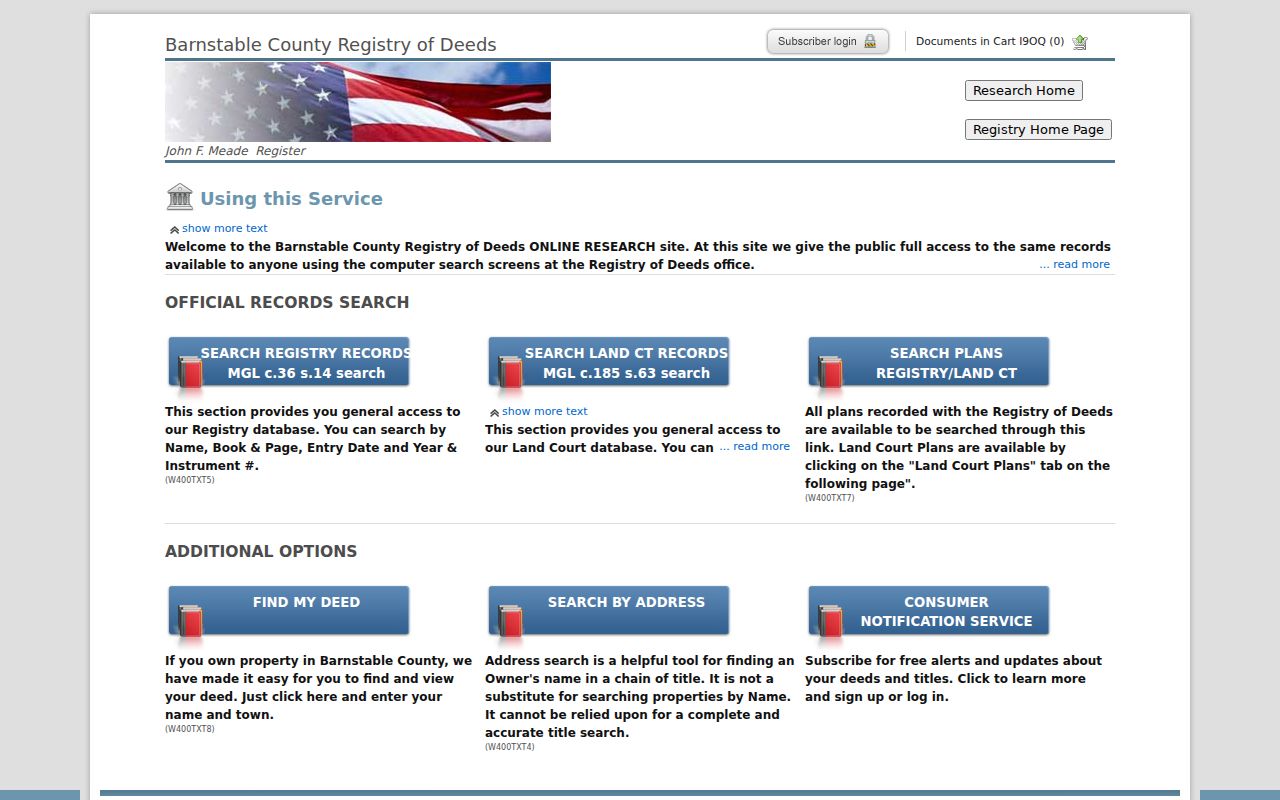
Use the route that matches the evidence already in hand. A plan or old book/page reference can be more reliable than forcing a historic property into a modern street field.
Note: Mark every historical finding with a source date, because a record’s age is part of what it can prove.
Barnstable Historic Registry Records
The Registry records property-title history, including deeds, mortgages, discharges, assignments, liens, easements, restrictions, and plans. It does not certify present occupancy. For historic households, it supplies the ownership spine that lets household material be checked against a particular parcel and time. Name search accepts last name or corporation, first name, party role, document type, town, index range, and date range. Search party roles separately and keep Barnstable town results distinct from the Registry’s broader county coverage.
Find My Deed is a narrower convenience route. It asks for last name, first name, and town, then limits the search to deed and time-share categories. Same-name hits can occur, so it does not replace the regular name, book/page, or instrument search.
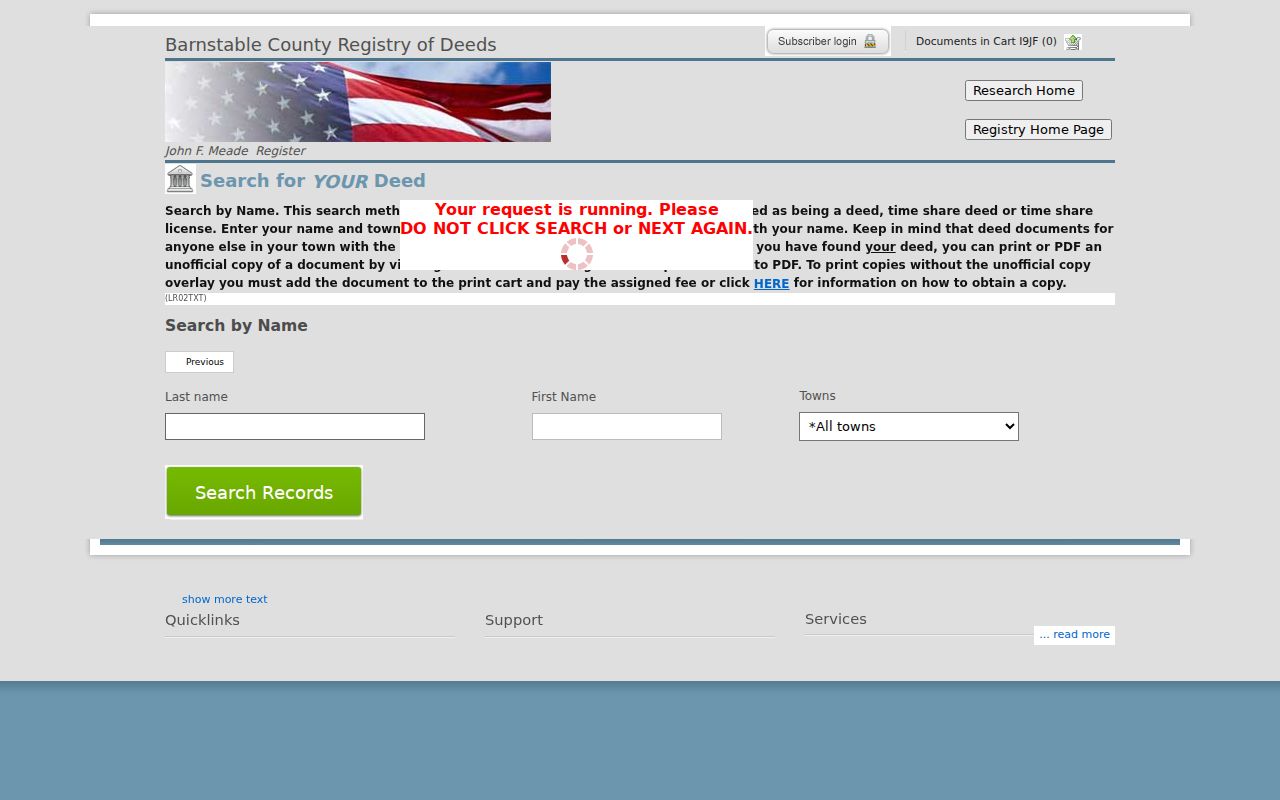
The form is most useful for locating a likely deed, then opening the actual instrument to check parties, recording date, town, and book/page or instrument number.
Barnstable Backward Deed Records
A chain of title follows recorded transfers backward from the present property record. Begin with the Town assessor to capture the parcel, village, owner-as-of date, and sale-history reference. Then use the Registry to read the acquisition deed rather than assuming that the assessed field tells the whole title history. The seller on that deed can be searched as a grantee to find the earlier acquisition, and the sequence can continue through recorded instruments.
- Pull the current assessor detail and preserve the property address, village, parcel or map-block-lot, owner-as-of date, and any sale-history book/page reference.
- Search the recorded owner or book/page in the Registry. Open the deed image and note the grantee, grantor, town, recording date, instrument type, and book/page or instrument number.
- Search the seller from that deed as a grantee, then compare the prior purchase with the same parcel, legal description, plan, or other document reference.
- Repeat the process one transfer at a time. Search name variants, trust or corporation names, and both party roles where the record supports them.
- For older periods, use the prior book/page, plan, or Land Court reference instead of treating the Registry address index as complete. Very old or oversized plans can be exceptions to online coverage.
- Grantor
- The party transferring an interest in a recorded instrument.
- Grantee
- The party receiving that recorded interest. A grantee entry proves the transaction, not later occupancy.
- Chain of title
- The linked sequence of recorded instruments used to trace transfers for a specific property.
- Legal description
- The property description in the instrument or plan. It can connect old records when a street label has changed or is absent.
A Registry public-access page explains that online index and image viewing is free, while the displayed image is not an official copy.
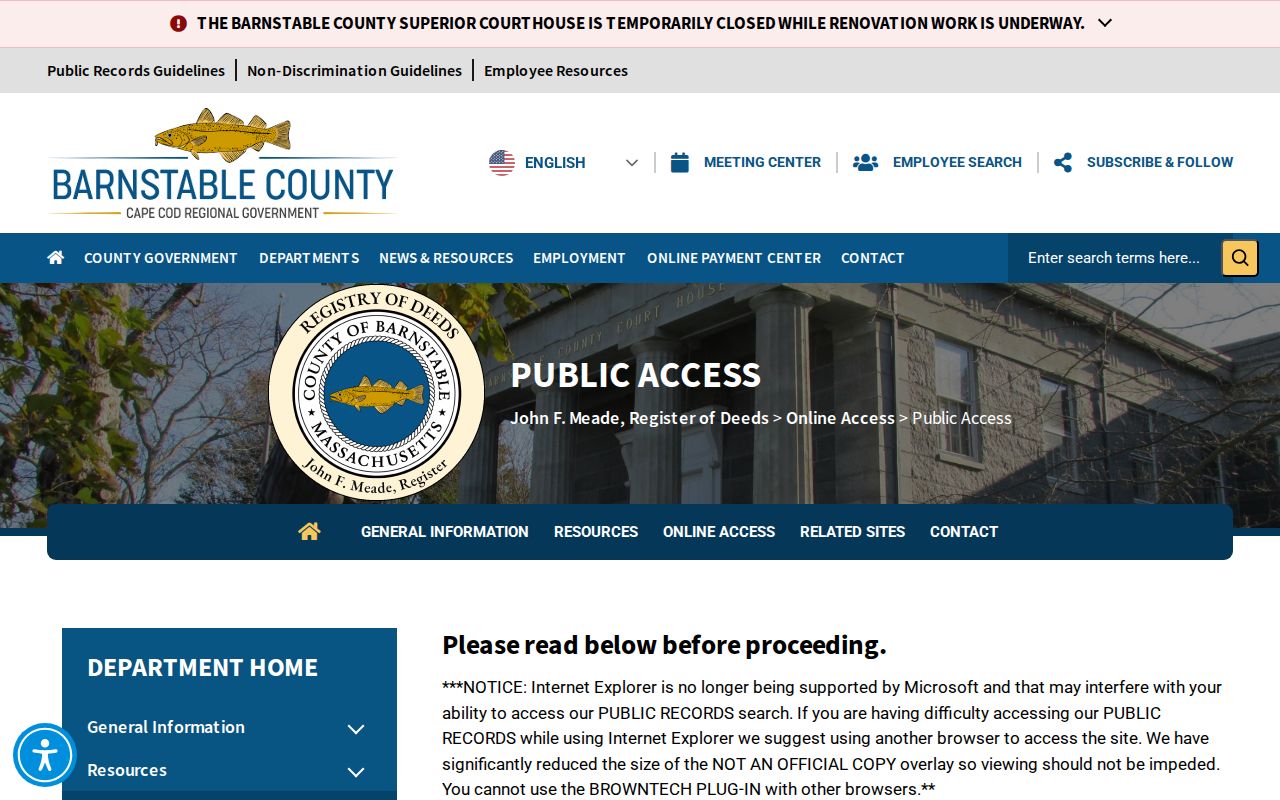
The image lets a researcher verify the recorded details. A clean printed copy uses the Registry print cart and is paid separately.
Barnstable Historical Newspaper Records
Sturgis Library’s newspaper collections are a direct historical route when a deed chain needs a date or a household lead. The Barnstable Patriot digital archive covers 1830 through 2017, and the Barnstable Register digital archive covers 1836 through 2017. The library also describes print and microfilm research from the nineteenth century to the present, with assistance by phone, email, and in person. Its current page says the digital archive is back online and offers a renewable hobby account using the STURGIS code.
Preserve the newspaper title, date, page or image number when available, search term, headline, and item type. A legal notice, obituary, advertisement, or civic item is an indexed historical source, not automatic proof of residence. Use a Registry document or other custody record to verify a property claim made in an article.
The Sturgis finding-aid collection also describes more than 2,000 early Cape deeds beginning in the 1620s, along with family papers, maps, cemetery records, organization records, and other local material. Repository holdings can be a lead, but should not be mislabeled as an online title index.
Barnstable Historic Household Records
The Massachusetts State Library confirms Barnstable and Hyannis directory years of 1895, 1901, and 1926, and Barnstable voting-list years of 1924, 1943 through 1959, 1966, 1967, 1980, and 1988. These are snapshots. They can place a name or business in a particular historic volume, but they do not establish that a person stayed at the address throughout the years between editions. The library’s city-directory collections are detailed on the Barnstable city directory page.
Sturgis MS.134 adds three boxes of original handwritten census records for most Cape towns, principally 1850, 1860, 1870, and 1880, including a Barnstable 1870 folder. The collection is incomplete. A handwritten town folder needs repository inspection and page-level citation; it is not a modern, fully searchable street database.
- Write the normalized Barnstable address, village or community label, parcel, and the date band being tested.
- Check the confirmed directory or voting-list snapshot nearest to that period, and record its repository, edition year, and the exact entry or page.
- Search the Sturgis newspaper index by surname, address, business, or organization, then verify the article image and date before relying on the hit.
- Consult MS.134 or another finding aid only as the collection’s scope permits. Preserve the town folder, box, and page details because the series is incomplete.
- Compare a household clue with the dated deed chain, probate file, or cemetery record. Do not join two people just because a surname is shared.
Note: A directory or census hit records a historical snapshot, not a continuous address history.
Barnstable Probate Record Trail
Estate administration can provide a lawful endpoint for historic house-history research when a recorded transfer, death notice, or family record points to probate. Barnstable Probate and Family Court serves the county for estates and administration, guardianship, conservatorship, and related matters. The online docket is an index, not the complete court file. Cross-check any docket result with the Register or Clerk file and expect confidential or impounded material to remain outside ordinary public search.
Registry document categories such as Estate Tax Release, Final Decree, Court Order, Land Court Decree, Petition to Land Court, Power of Attorney, and trust-related instruments can flag a title question that deserves probate research. They are not proof that a particular probate case exists. Record the court, docket, record type, and date before connecting an estate matter to the address.
For a self-service estate lead, official unclaimed-property search results can be relevant only after identity and estate evidence are independently established. A result may reflect an old address, a business relationship, or a forgotten payment. It does not prove current Barnstable residence or financial condition.
Barnstable Historical Record Requests
When a Registry result is not online or the needed image needs formal handling, use the Registry’s public-record route with a narrow request. State the record type, time period, party or book/page reference, town, and preferred format. The Registry explains which records it holds and directs requests through its Records Access Officer. It also makes clear that vital, arrest, criminal, divorce, adoption, and court questions belong with other custodians.
The Registry public-record guidelines identify those boundaries and the request process.
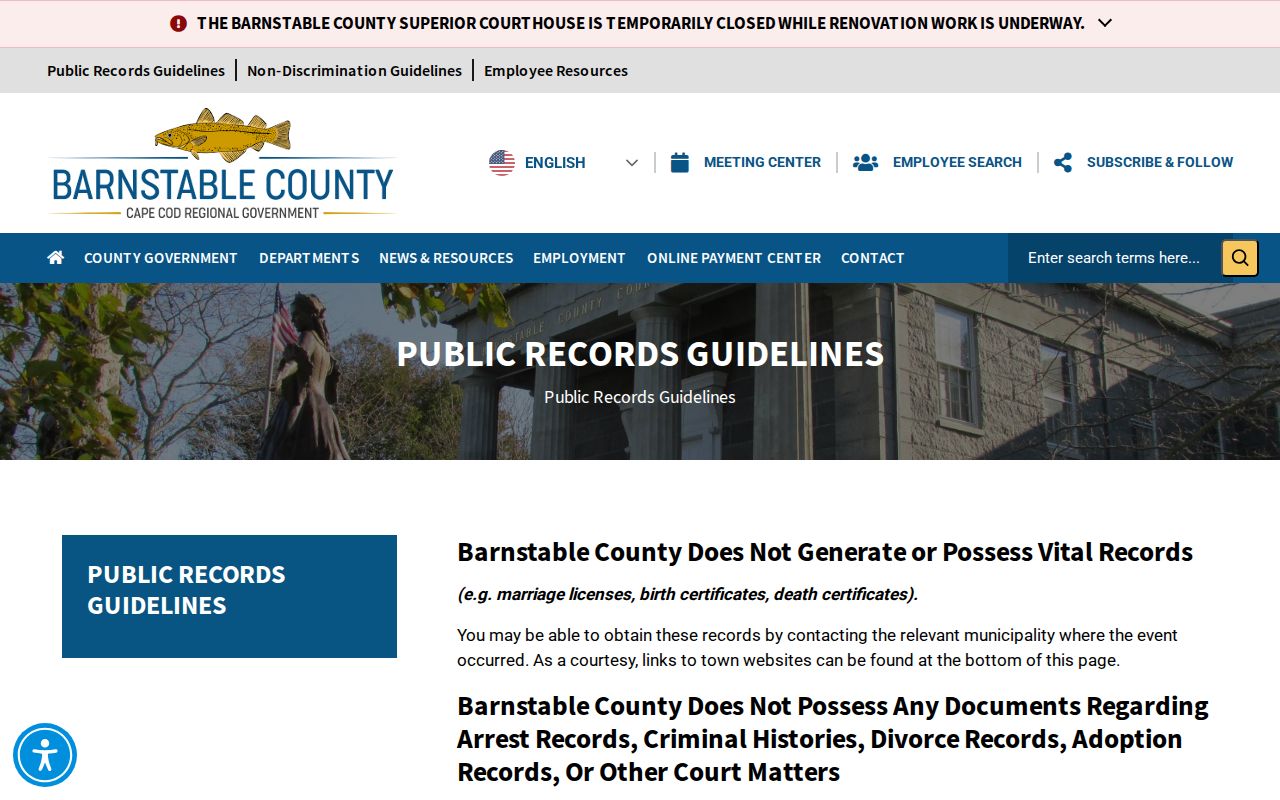
Specific requests are easier to assess than an open-ended request for a person’s history. The Massachusetts Public Records Law, MGL c.66 §10 with exemptions in MGL c.4 §7, does not override court, vital-record, or protected-address limits.
Barnstable Cemetery Record Limits
The Town Cemetery Department lists fourteen active and inactive cemeteries and links to a burial search, but the inspected research did not capture the actual search endpoint or its fields. Treat a cemetery as a historical identity or family-relationship lead, not proof that someone lived in Barnstable at death. Sturgis finding aids also include cemetery records, family Bibles, church records, and organization material that can add context when documented by collection, box, and folder.
Historic grounds named in town preservation material include Old West Barnstable, Hyannis Ancient, Centerville Ancient, Hillside, Lothrop Hill, Marstons Mills, Mosswood, Oak Grove, and Sandy Street. Their dates help place local history, but no individual burial should be inferred from a cemetery’s age. Contact the custody source for an actual burial record rather than assuming a complete online name search exists.
Barnstable Past Household Records
Historic household records are most useful for family history, house history, estate work, and personal curiosity when they are kept in time order. A title record may identify a past owner. A directory, newspaper, census folder, probate file, or cemetery record may supply a separate household lead. None should be turned into a profile of a living person or used to infer current contact details, household composition, or a present address.
The Registry’s fee and recording-procedures page is the source for paid clean prints. The Registry states that clean prints cost $1 per page plus the listed card convenience charge. Keep the informational online image, a clean copy, and a certified record distinct when notes or a request need formal documentation.
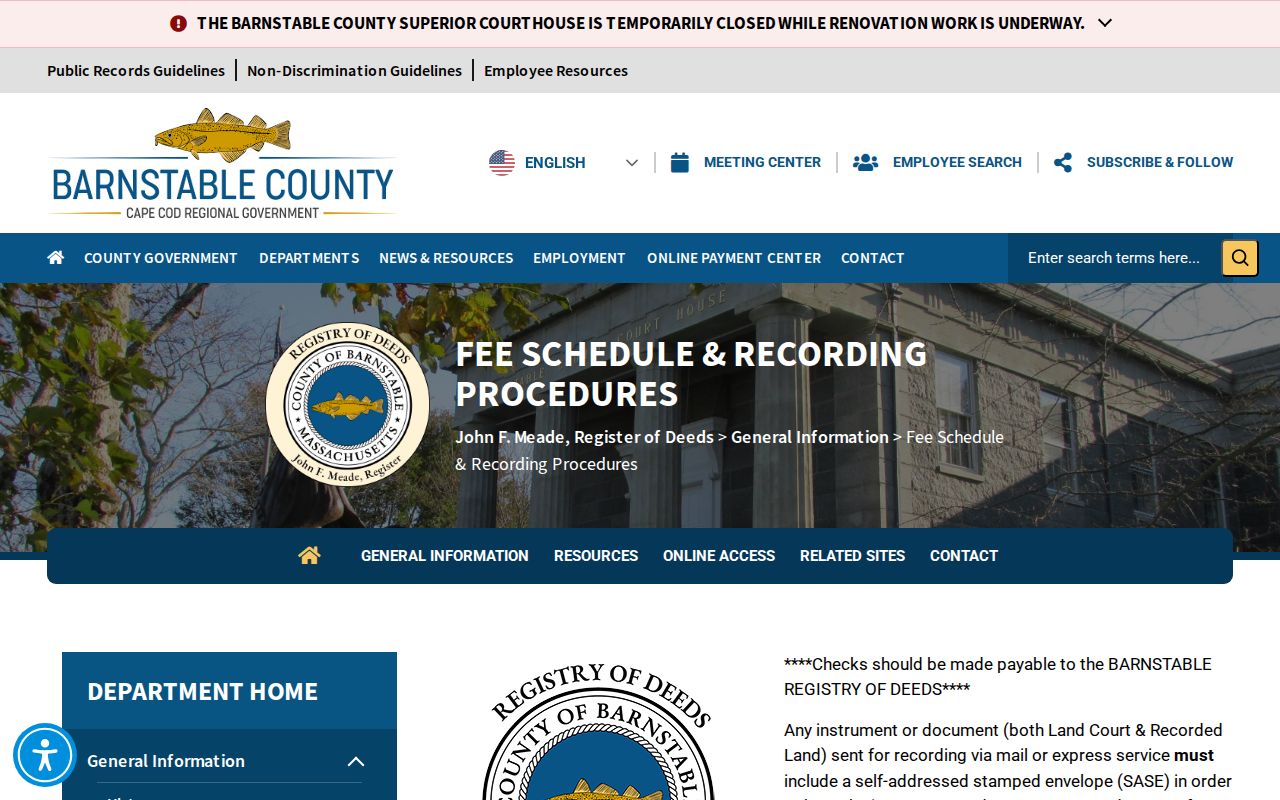
The fee page helps set expectations before requesting a copy, while the title chain and historical holdings provide the research trail.
Lawful use. Use Barnstable historical and property records for house history, family history, estate research, or personal reference. MGL c.265 §§43 and 43A address stalking and criminal harassment, so do not use a past-resident trail to monitor, contact, or harass a living person.