
Barnstable Resident Lookup Record Coverage
A Barnstable resident lookup is strongest when it begins with the type of fact that needs checking. The Town Clerk can route a focused request for municipal records, the state court system provides a docket index, and the election office handles municipal voter-list requests. Vital records are held locally for local events and statewide through the Registry of Vital Records and Statistics. Probate can create a lawful trail for an estate or heir question, while the state unclaimed-property search is only a self-service lead for a person or estate. None of these sources is a complete roster of current residents.
| Record source | Question it can help check | Custodian | Access boundary |
|---|---|---|---|
| Municipal certificates and archive material | A local event or defined town record | Barnstable Town Clerk | Ask for the record type, date range, and public status |
| Court docket index | A case reference, court, action, and status | Massachusetts Trial Court eAccess | Online index, not the official file |
| Voter status or municipal list | Election-administration status or an authorized public list | State voter-status lookup and Town Clerk | Individual query and protected-field rules apply |
| Birth, marriage, or death record | A documented life event | Town Clerk or Massachusetts RVRS | Eligibility and record-age rules apply |
| Unclaimed-property search | A possible estate or self-service claim lead | FindMassMoney | Not proof of current residence or financial condition |
Start with the narrowest reliable identifier. A court location and case number are better than a surname alone. A dated certificate request is better than asking for every record tied to a person. Property ownership, a voter address, or a search result can be a lead, not confirmation that someone lives at an address now. The source date and access rule belong with every note made during a resident lookup.
Note: Barnstable is a town, while Barnstable County records and court venues can cover a wider geography.
Barnstable Resident Lookup Through Court Dockets
Massachusetts court-docket instructions show that Trial Court eAccess searches by Name, Case Type, Case Number, or Ticket/Citation. Department, division, and location are core filters. Use the exact case-number format when known, including capitalization, spaces, and leading zeroes. A name search needs extra care because search rules vary by court department and an identical name can refer to more than one person.
The court result is a docket index, not the official court file, and the portal cautions that the latest activity may not appear online. A name hit does not establish liability, a conviction, current legal status, or current residence. Capture the case number, court, case type, file date, and displayed status before contacting the clerk about a particular file. Case Type searches also use a short date range, with official instructions describing a maximum month or 30-day span.
The official docket-search guide illustrates the fields to compare before treating two court entries as one person.
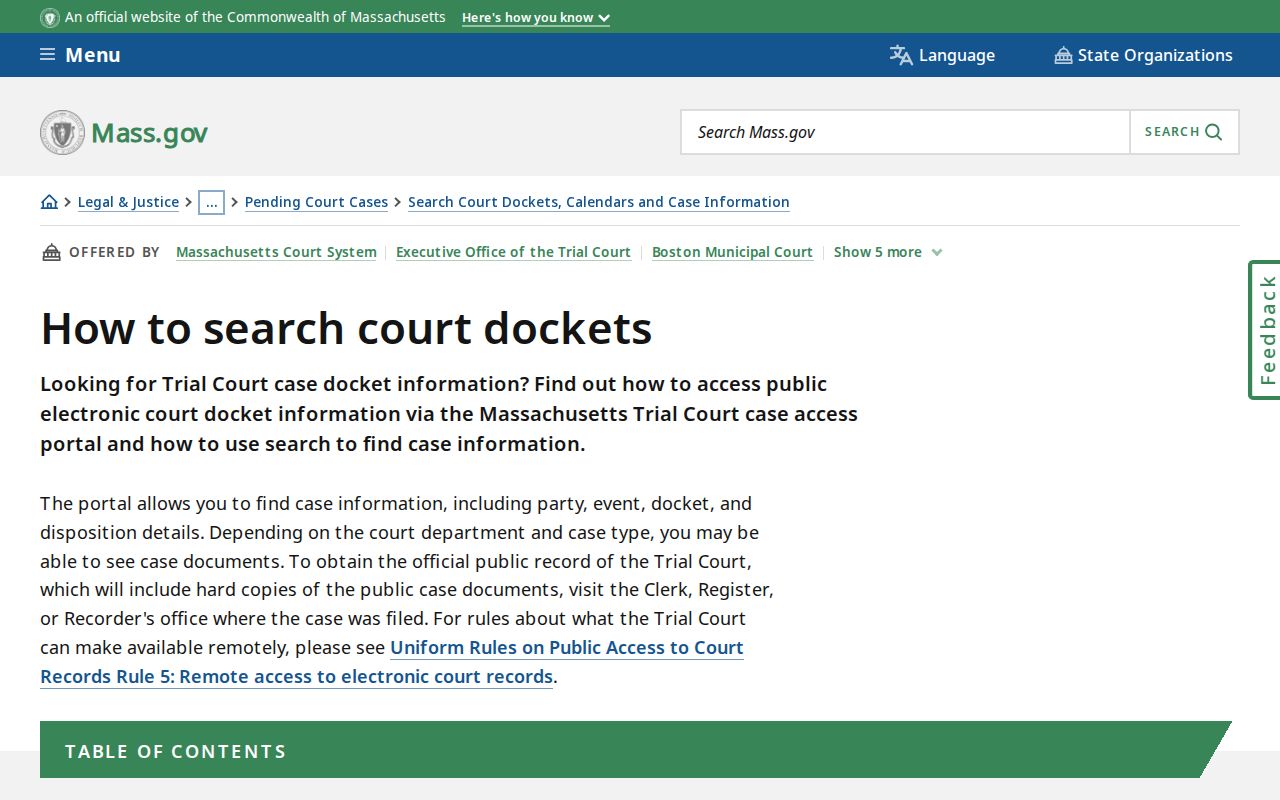
Its search controls reinforce why a Barnstable resident lookup should retain the court location and case type instead of relying on a name alone.
| Result field | What to record |
|---|---|
| Party or company | The name as the court displays it, including a possible variant |
| Case number and type | The identifier needed to distinguish similarly named cases |
| File date and initiating action | The timeframe and opening event shown in the index |
| Case status and court | The displayed status and the court that maintains the case |
Note: A displayed case status is an index field, so confirm material details with the court clerk or official file.
Barnstable Resident Lookup for Probate Trails
Barnstable Probate and Family Court serves the county for estates and administration, guardianship, conservatorship, divorce, family matters, and related case types. Probate dockets can be useful when an heir needs a lawful estate trail, but public access differs by case type. Restricted, impounded, and confidential material is excluded from ordinary public searching.
For an estate matter, note the docket number, the type of proceeding, the file date, the party role, and the court. Then ask the Register or Clerk about access to the official file. An online entry can show an appointment of a personal representative or a closed status, yet it does not replace the file and should not be used to identify a present address. Historic divorce research follows separate court-archive and Probate and Family Court instructions, often requiring the docket and the correct time period.
The Barnstable Probate and Family Court location page identifies the local court and its record context.
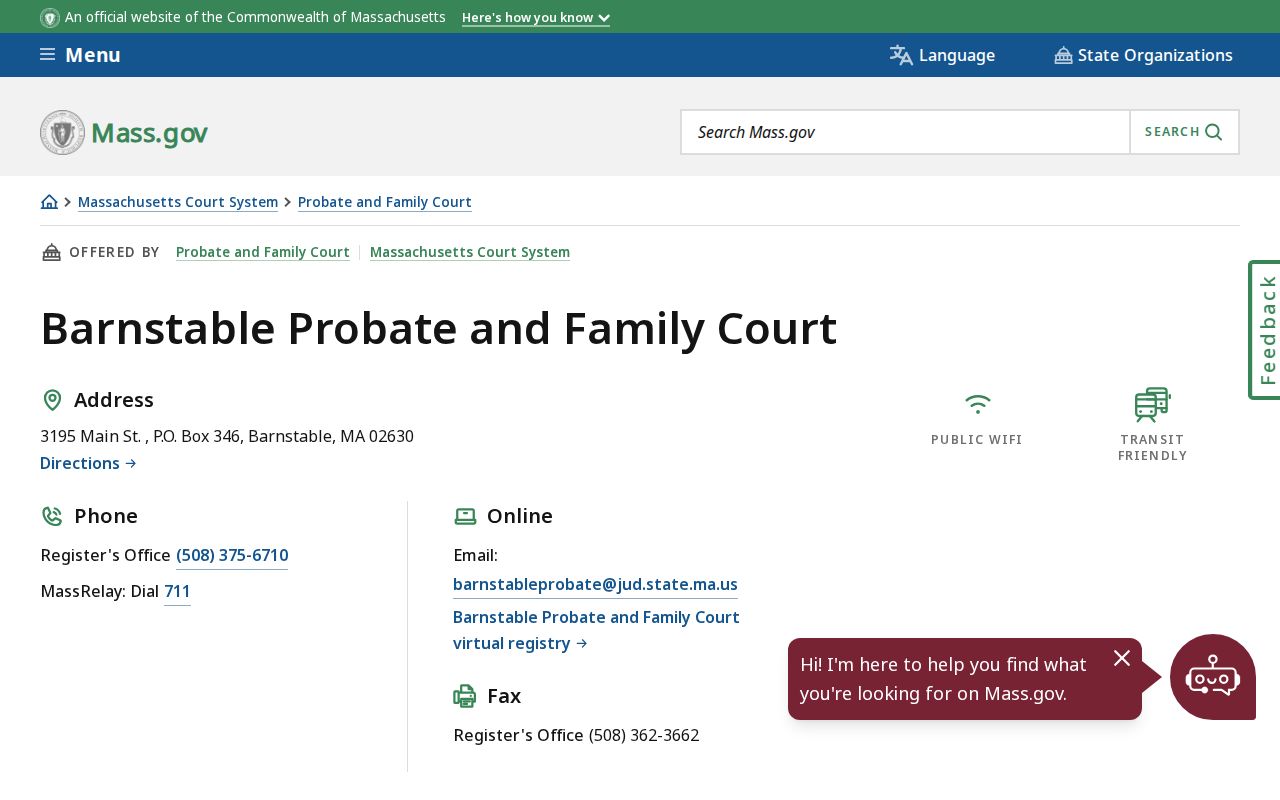
Use the court contact path to ask about a defined case, not to request protected material or a broad personal dossier.
Barnstable Resident Lookup Across Record Eras
Dates are part of identity checking. Barnstable County Registry property records begin in 1742, Land Court records begin in 1898, and the Registry’s address index begins only in August 1993. That makes a recent address result a poor shortcut for an old property or estate question. A record from an older deed, plan, or court period should be labeled with its source date and record type before it is paired with any modern result.
The Registry document choices include Death Certificate, Estate Tax Release, Final Decree, Court Order, Land Court Decree, Petition to Land Court, Power of Attorney, and trust-related instruments. Those are document categories, not automatic proof of a probate case or a person’s residence. For vital research, RVRS statewide coverage begins in 1936, while local clerk custody can apply to local events. The different starting dates explain why one Barnstable resident lookup may require several custodians and a clear time frame.
Note: A historical entry identifies a person at a documented time, not their present address or legal status.
Verify a Barnstable Resident Across Records
Verification is a source chain, not a pile of surname hits. Begin with one fact from the record itself, then compare a second record created for a different purpose. For example, a court docket may supply a case number and location, while an eligible vital-record request can address a particular life event. Keep each item dated. If the details conflict, preserve the conflict instead of combining the records into a single profile.
- Write the exact name, any former name, the date range, and one independent identifier already known.
- Check the relevant custodian first, such as the voter-status tool for an individual query or eAccess for a court docket.
- Compare the case number, court, event date, or other source-specific field rather than matching on surname alone.
- Request a certified or official record from the custodian only when the access rule allows it and the record is needed.
- Docket
- A court-maintained index of a case and its listed events. It is not the complete case file.
- Index versus image
- An index points to a record. An image or file may have different access rules, and court material can be restricted.
- Certified copy
- A copy issued or certified by the custodian. Vital-record eligibility rules can control who may obtain it.
Historical sources can add context without proving a current address. For a collection-based historical trail rather than a one-person verification, the Barnstable City Directory keeps the repository and date-range work separate.
Barnstable Resident Lookup and Voter Access
The state individual voter-status lookup requires a first name, last name, date of birth, five-digit residential ZIP, and an agreement checkbox. It is not a public statewide table of names. For a Barnstable municipal voter list, contact the Town Clerk or election office and state the municipality, ward or precinct, year, and preferred format.
Public municipal-list fields can include name, address, party, date of birth, active or inactive status, and voter ID, with other fields depending on the request and record. Telephone, email, veteran status, permanent absentee information, confidential voter records, and minor or pre-registration information are not ordinary public fields. A registration address is not proof of occupancy or continuous presence, and active or inactive status is an election-administration label, not a judgment about a person.
The state voter-information page distinguishes municipal public-list access from confidential fields.
That distinction keeps a Barnstable resident lookup focused on lawful election records rather than private contact details.
Note: The Town Clerk lists election contact at 508-862-4044, and municipal census or street-list material has separate retention and privacy rules.
Barnstable Resident Lookup and Vital Records
The Town Clerk holds local copies and event-related municipal material, while the Massachusetts Registry of Vital Records and Statistics holds statewide records from 1936 forward. Depending on the event and custody, a record may be available from the local clerk, RVRS, or both. The state ordering route offers online, phone, mail, and in-person channels, while a mail request requires the application, identification, payment, and the required return envelope materials.
Vital records are not an open identity database. Birth and marriage records generally use a 90-year genealogy-access baseline, and death records a 50-year baseline. Newer copies can require relationship, authorization, identification, a court order, or another exception. Adoption records have a separate state process, so an ordinary birth-certificate order should not be treated as an adoption-record request. Confirm current rules before placing an order because eligibility depends on the record and the requester.
Barnstable Resident Lookup Records Requests
The Barnstable Town Clerk is at 367 Main Street in Hyannis. The office lists Ann Quirk, 508-862-4044, and weekday hours of 8:30 a.m. to 4:30 p.m. Its subjects include certificates, marriage intentions and licenses, elections, business certificates, dog licenses, archives, election results, and municipal public records. A local census or street list is a municipal product, not a current federal census or a complete directory.
Under the Massachusetts Public Records Law, MGL c.66 §10 and MGL c.4 §7, a request may be verbal, in person, or written. Written requests matter if an appeal becomes necessary. Name the record type, date range, department, and preferred format. The usual response framework is ten business days, subject to lawful exemptions and extensions. A clear request can receive a record, a no-record response, a withholding explanation, a timing notice, or a fee notice.
Ask for a dated business certificate, a specified election list, a particular meeting record, or another defined record. Do not request everything about a person. That approach gives the Records Access Officer a practical scope and respects the limits that attach to personal material.
Barnstable Resident Lookup Privacy Limits
Massachusetts public-record access has limits. MGL c.66 §10 works with exemptions in MGL c.4 §7, court impoundment, voter confidentiality, vital-record eligibility, and other agency-specific protections. The Massachusetts Address Confidentiality Program can provide a substitute address and mail forwarding for eligible survivors and other protected applicants who face address-disclosure danger. Court Rule 1:20 also provides a substitute-address and impoundment route for protected court participants.
These protections do not promise that every older disclosure disappears, and a person’s address must never be reconstructed or republished from separate sources. When a record seems wrong, contact the office that maintains it. Keep full dates of birth, medical details, minor information, and sensitive addresses out of personal notes unless the custodian requires them for an authorized request.
The Massachusetts Address Confidentiality Program explains the substitute-address pathway for eligible participants.
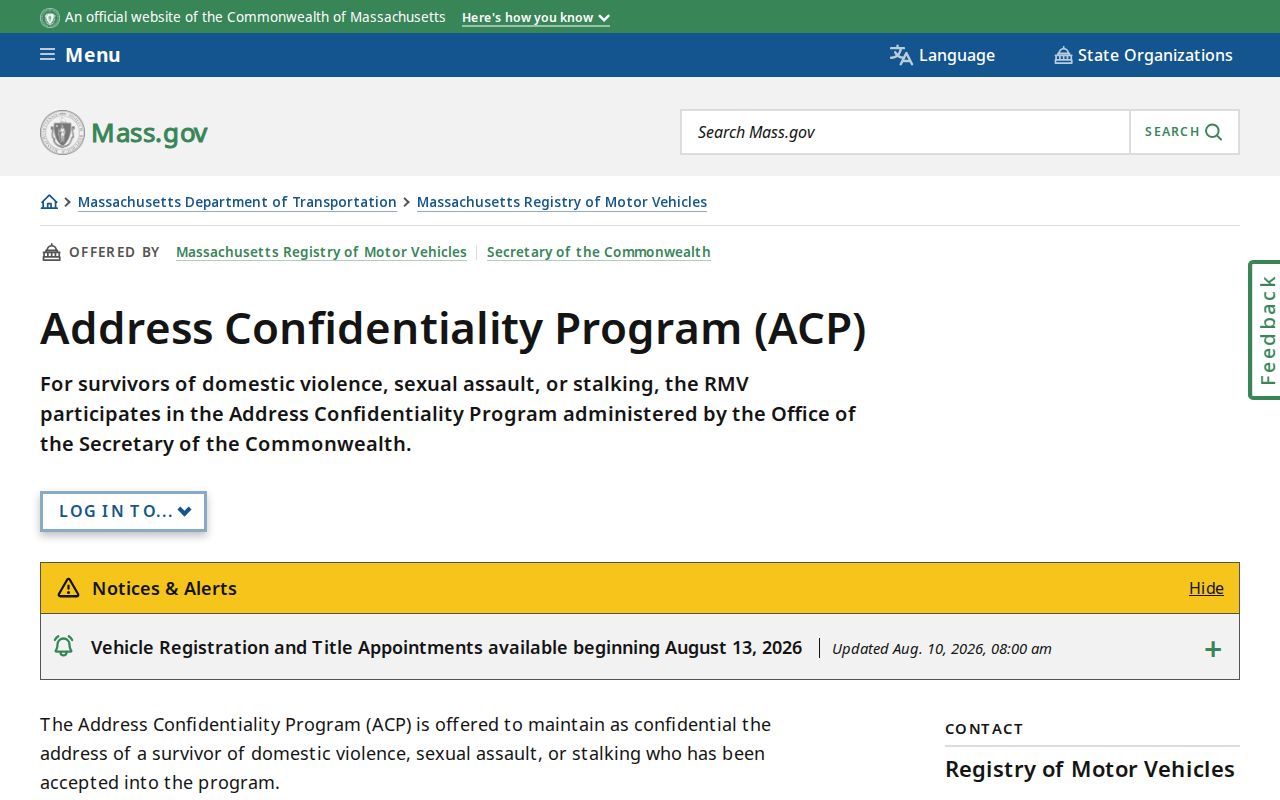
Its safety-first process is a reason to stop rather than pursue address details that a protected person has chosen to shield.
Lawful use. Use a Barnstable resident lookup for personal, lawful research and defined record questions. Do not use record details to stalk, harass, intimidate, or harm anyone.